How to Detect Fuel Theft with GPS in Your Fleet
Fuel is usually a fleet's largest expense, and also one of the hardest to control. When unexplained "leaks" appear that don't match real consumption, there's almost always one cause: fuel theft. The good news is that with the right GPS and sensors you can detect it in real time and stop the loss.
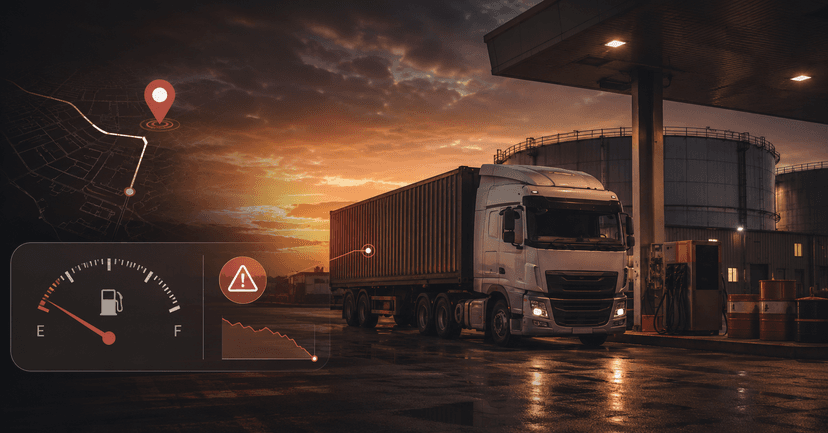
🎯 Who this article is for: fleet managers, transport companies, and tracking businesses that want to reduce fuel losses.
How fuel gets stolen in a fleet
Before detecting it, it helps to understand the most common methods:
- Direct tank draining: fuel siphoned out with a hose, usually away from authorized refueling points.
- Inflated refueling: more fuel is billed than actually enters the tank.
- Siphoning during stops: small repeated extractions that go unnoticed on paper.
- Sensor tampering: disconnecting or altering the measurement to hide the difference.
The common pattern is always the same: a drop in level that doesn't match the expected consumption for that route.
The principle of detection
Detecting fuel theft comes down to comparing two things:
- How much fuel should have been consumed based on the distance traveled and the engine.
- How much fuel actually left the tank, measured by a sensor.
When there is a sharp level drop outside a refueling point, or consumption that doesn't add up with the route, your tracking platform can trigger an instant alert with date, time, and exact GPS location, based on the data the device sends. That turns a suspicion into actionable evidence.
Methods to measure fuel (and their accuracy)
Not every vehicle is measured the same way. These are the four methods, ranked by accuracy. You can see the details of each on our fuel control page:
| Method | Accuracy | Ideal for |
|---|---|---|
| CAN bus / ECU | ±0.5% | Modern vehicles (reads the engine computer) |
| Flow sensor | ±1% | Machinery, equipment with no factory data |
| Level sensor (probe) | ±5% | Trucks and tanks of any age |
| OBD2 | ±5% | Cars and pickup trucks |
💡 Tip: for theft detection, what matters is not just absolute accuracy, but sampling frequency: the more often the level is measured, the easier it is to spot a suspicious discharge.
Reading via CAN bus is the cleanest because it doesn't touch the tank, but a good level sensor is the universal option when the vehicle doesn't expose the data through its computer.
Which alerts to configure
The device provides the measurement; the alerts are configured in your tracking platform (Wialon, Traccar, Cybermapa, or whichever you use) based on that data. These are the ones that actually detect theft:
- Level drop outside an authorized refueling point → the most direct alert.
- Discharge above a threshold in a few minutes (for example, more than 20 liters in 5 minutes).
- Refueling recorded lower than billed → detects inflated refueling.
- Loss of fuel sensor signal → possible tampering.
- Trip consumption out of range versus the vehicle's historical average.
Every alert should arrive with the GPS location of the event. Without geolocation, a level drop is just a number; with it, you know exactly where and when it happened.
How Rinho solves it
The device's role is to measure fuel reliably and transmit that data; the theft detection and alerts live in the platform you choose, where the rules are defined and the reports are generated.
- Rinho Spider IoT and Rinho Smart IoT: measure fuel via CAN bus, flow sensor, and level sensor, sending the data often enough to detect a discharge.
- That data feeds the trip consumption reports and the unauthorized discharge alerts you configure in Wialon, Traccar, Cybermapa, or the platform you use.
- As hardware that integrates (not a closed platform), the device fits your current operation without forcing you to change software.
Companies that implement fuel control report savings of 10% to 15% by eliminating theft and inefficiencies.
Conclusion
Fuel theft isn't fought with suspicions, but with data: measure the real level, compare it with the expected consumption, and receive a geolocated alert when something doesn't add up. With the right equipment, a loss that used to be invisible becomes an event with a date, time, and place.
Want to stop fuel losses in your fleet? Contact us and we'll advise you on the ideal measurement method for your vehicles.
Related articles
Related articles

How to Measure Fuel: CAN Bus, Level Sensor, and Flow
Compare the methods to measure fuel in your fleet —CAN bus, level sensor, flow, and OBD2— with their accuracy, installation, and which one suits your case.

Fuel Control in Road and Agricultural Machinery
Control fuel consumption in harvesters, tractors, and road machinery: measurement by working hours, equipment without CAN, and operation in no-signal areas.

J1939 GPS Tracking: What Engine Data You Can Read
Which engine parameters a GPS tracker can read over J1939 on heavy trucks —RPM, fuel, hours, odometer— and how to capture custom signals with CXECU.