How to Measure Fuel: CAN Bus, Level Sensor, and Flow
To control a fleet's fuel you first have to measure it, and there is no single method: each one has a different accuracy, installation cost, and ideal use case. Choosing the wrong one means unreliable data or overspending. This guide compares the four methods so you pick the right one for your vehicle.

🎯 Who this article is for: fleet managers and integrators who need to decide how to measure fuel across different vehicle types.
The four methods, from highest to lowest accuracy
1. CAN bus / ECU (±0.5%) — the most accurate
Reads the level and consumption directly from the vehicle's computer, without touching the tank.
- ✅ Maximum accuracy, no drilling or tank sensors.
- ✅ Clean, non-invasive installation (data bus reading).
- ⚠️ Requires the vehicle to expose the data over CAN (most modern ones, not older ones).
It's the ideal option in modern fleets. You can see how it works in our CAN bus guide.
2. Flow sensor (±1%)
Measures the fuel that passes through the line to the engine.
- ✅ Very accurate for instant consumption.
- ✅ Useful in machinery and equipment that don't provide factory data.
- ⚠️ More complex installation (spliced into the fuel line).
3. Level sensor / probe (±5%) — the universal one
A probe inside the tank measures the fuel height.
- ✅ Works on any vehicle, regardless of age.
- ✅ Ideal for detecting discharges (level drops).
- ⚠️ Requires installing the probe in the tank and calibrating it.
It's the most common option when the vehicle doesn't provide the data over CAN.
4. OBD2 (±5%)
Reads data through the diagnostic port.
- ✅ Quick installation (standard connector).
- ⚠️ Lower accuracy and data availability depending on the model.
- ⚠️ Meant for cars and pickups, not heavy vehicles.
Comparison table
| Method | Accuracy | Installation | Ideal for |
|---|---|---|---|
| CAN bus / ECU | ±0.5% | Non-invasive | Modern fleets |
| Flow sensor | ±1% | Complex | Machinery, special equipment |
| Level sensor | ±5% | Medium (in tank) | Any vehicle, theft detection |
| OBD2 | ±5% | Quick | Cars and pickups |
How to choose based on your fleet
- Modern vehicles that expose CAN? → CAN bus, no question.
- Mixed or older fleet? → level sensor, which works on all of them.
- Machinery or need fine instant consumption? → flow sensor.
- Light cars and pickups? → OBD2 as a quick option.
💡 Tip: many fleets combine methods: CAN bus where possible and a level sensor on the rest, unifying everything in the same platform.
The role of the device and the platform
It helps to be clear about the split: the Rinho device measures and transmits the fuel by any of these methods. The reporting and alert logic (trip consumption, theft detection, thresholds) is configured in your tracking platform —Wialon, Traccar, Cybermapa, or the one you use—, which is where the rules live.
- Rinho Spider IoT and Rinho Smart IoT measure via CAN bus, flow, and level.
- As hardware that integrates, the data reaches your current platform without forcing you to change software.
You can see the details of each method and the accuracy figures on the fuel control page.
Conclusion
There is no "best" method in the abstract: there is a right one for each vehicle. CAN bus when the equipment allows it, level sensor as the universal option, flow for fine accuracy, and OBD2 for light vehicles. What matters is measuring with reliable data and unifying it in a single platform.
Not sure which method suits your vehicles? Contact us and we'll advise you based on your fleet.
Related articles
Related articles
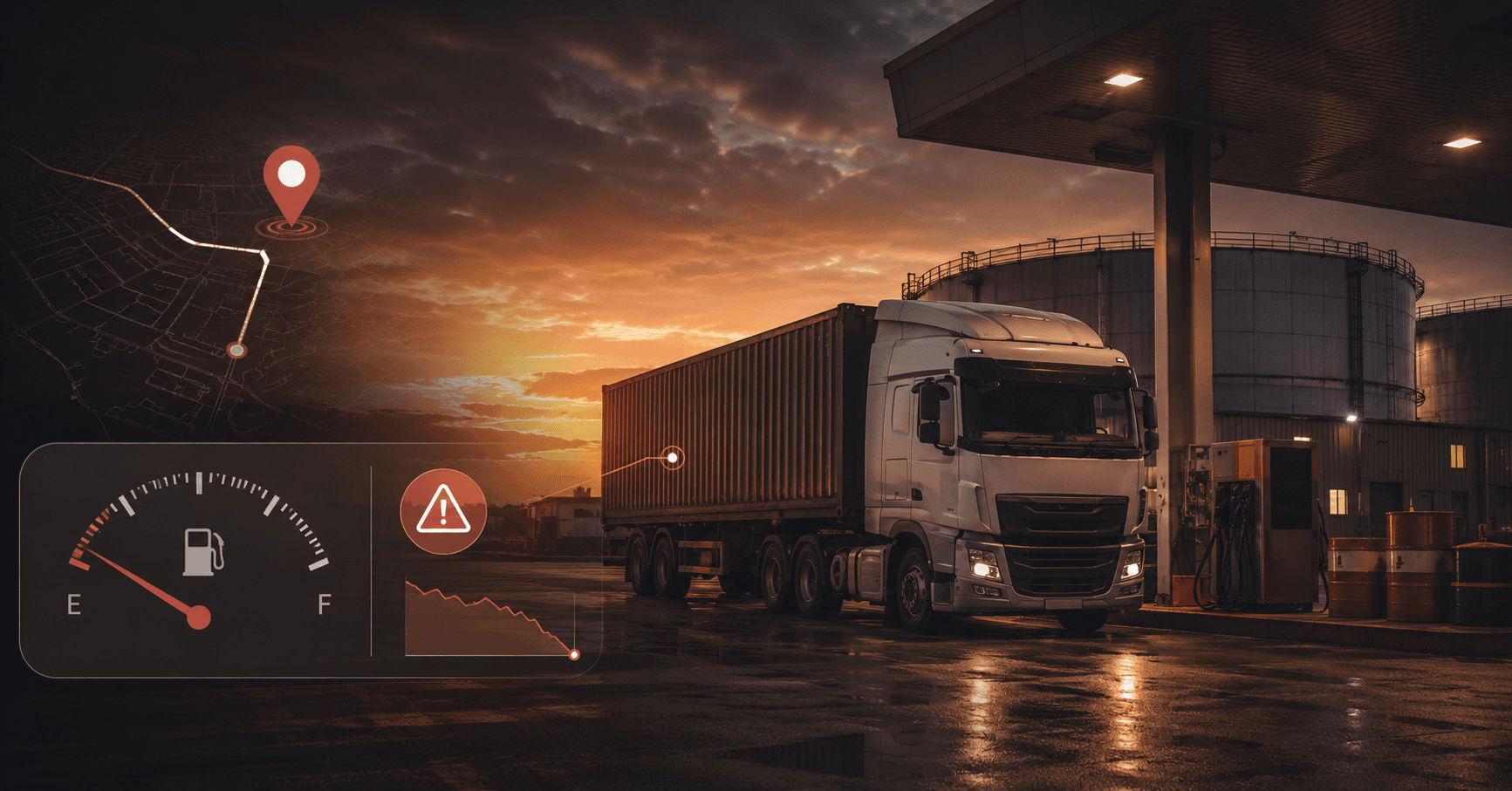
How to Detect Fuel Theft with GPS in Your Fleet
Learn how to detect and prevent fuel theft in your fleet with GPS and sensors: measurement methods, real-time alerts, and how to cut losses.

Fuel Control in Road and Agricultural Machinery
Control fuel consumption in harvesters, tractors, and road machinery: measurement by working hours, equipment without CAN, and operation in no-signal areas.
Fleet Fuel Control: Complete Guide to Reducing Costs
Complete fleet fuel control guide: monitoring technologies, practical tips, ROI calculation, and tools to reduce costs by up to 20%.