CAN Bus: What It Is, How It Works and What It's Used For [2026 Guide]
CAN Bus (Controller Area Network) is the communication protocol that allows all electronic systems in your vehicle to communicate with each other. If you've ever wondered how the dashboard knows the speed, fuel level, or if there's an engine fault, the answer is CAN Bus.
In this complete guide, we explain what it is, how it works, and why it's essential for modern vehicle telematics.
What is CAN Bus?
CAN Bus is a serial communication standard designed by Bosch in the 1980s. Originally created for the automotive industry, it has expanded to industrial, aerospace, and medical applications.
In simple terms: CAN Bus is the vehicle's "nervous system". It connects all electronic modules (engine, brakes, airbags, dashboard, etc.) allowing them to exchange information in real-time.
Why Was CAN Bus Created?
Before CAN Bus, each sensor or actuator needed dedicated wires. A modern car has more than 70 electronic modules - without CAN Bus, the wiring would weigh hundreds of extra kilos.
Key Features
- Multi-master architecture: Any node can initiate communication
- Priority-based messaging: Higher priority messages are transmitted first
- Error detection: Built-in mechanisms for data integrity
- High noise immunity: Differential signaling for robust communication
How Does It Work?
Physical Layer
CAN Bus uses two wires:
- CAN-H (High): Carries the dominant voltage
- CAN-L (Low): Carries the recessive voltage
The difference between both signals determines if the bit is dominant (0) or recessive (1).
Data Frame Structure
A standard CAN frame includes:
| Field | Bits | Description |
|---|---|---|
| SOF | 1 | Start of Frame |
| Identifier | 11/29 | Message ID (priority) |
| RTR | 1 | Remote Transmission Request |
| IDE | 1 | Identifier Extension |
| DLC | 4 | Data Length Code |
| Data | 0-64 | Actual data payload |
| CRC | 15 | Checksum for error detection |
| ACK | 2 | Acknowledgment |
| EOF | 7 | End of Frame |
CAN Bus in Vehicles
Standard Parameters (OBD-II)
Common parameters accessible via CAN Bus:
- Engine RPM (PID 0x0C)
- Vehicle Speed (PID 0x0D)
- Fuel Level (PID 0x2F)
- Engine Coolant Temperature (PID 0x05)
- Throttle Position (PID 0x11)
- Engine Load (PID 0x04)
Proprietary Parameters
Vehicle manufacturers often include additional parameters:
- Total fuel consumed
- Detailed diagnostic codes
- Transmission data
- Safety system status
Rinho Telematics and CAN Bus
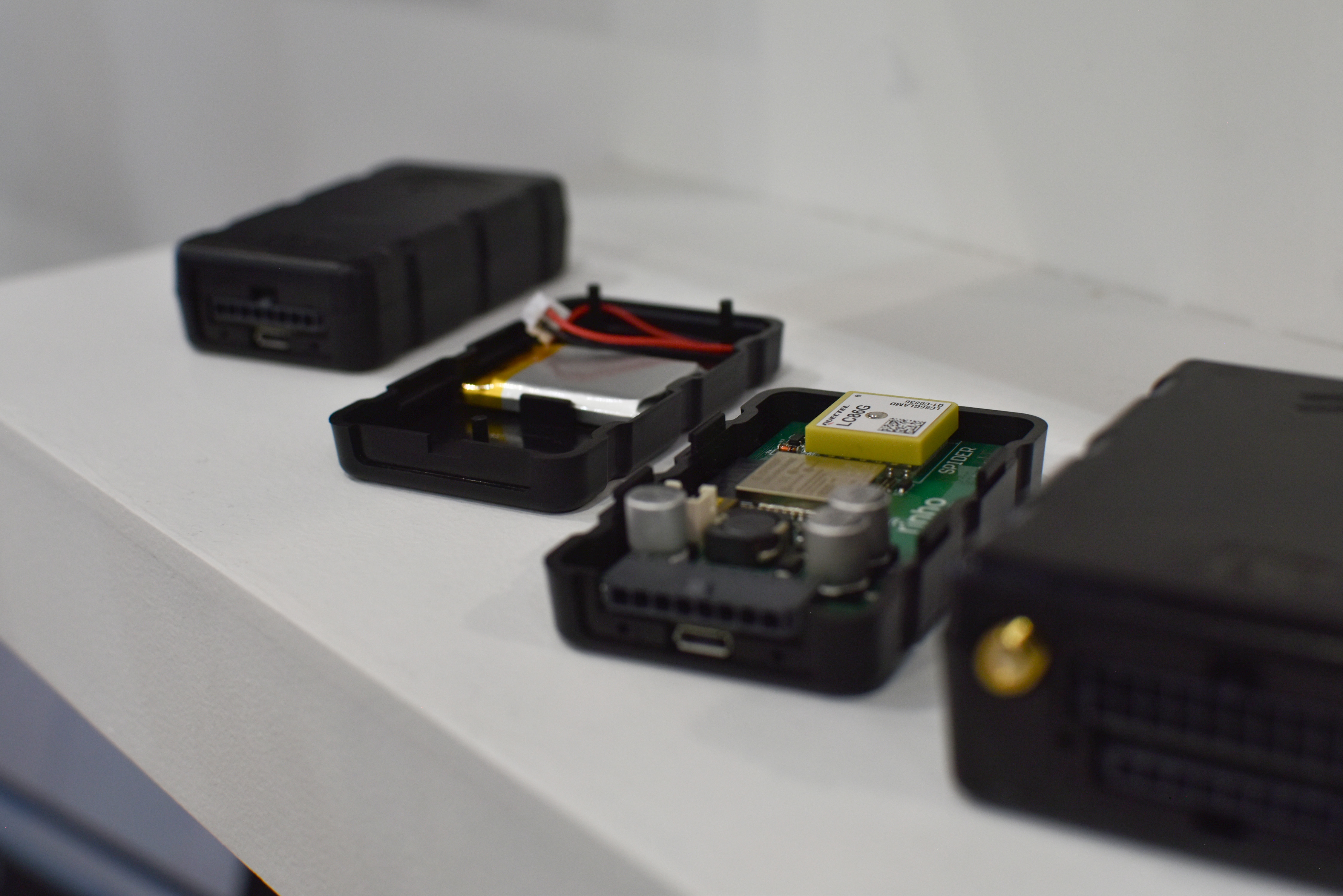
All Rinho devices include native CAN Bus support, allowing you to extract data directly from the vehicle's computer:
Spider IoT
- Single CAN channel
- Automatic protocol detection
- Compatible with most vehicles
- Ideal for mixed fleets
Smart IoT
- Dual CAN channels
- J1939 support for heavy vehicles
- Extended parameter extraction
- Perfect for trucks and machinery
Don't Need CAN Bus?
The Zero IoT is our most compact and affordable option for basic GPS tracking without CAN Bus reading.
Contactless CAN Bus Accessory
Don't want to intervene in the vehicle? Our contactless CAN Bus reader reads data without physical connection, ideal for vehicles under warranty or rental fleets.
Benefits for Fleet Management
Why is CAN Bus superior to traditional external sensors?
- Accurate fuel monitoring: Read actual fuel level from vehicle ECU (not estimates)
- Real odometer: Obtain manufacturer's odometer reading, impossible to tamper
- Engine diagnostics: Detect problems before costly failures occur
- Driver behavior: Analyze RPM, harsh braking, acceleration patterns
- Non-invasive installation: No need to drill the tank or install additional sensors
- Real-time data: Instant information, not sampled
💡 Important fact: CAN Bus fuel control has 99% accuracy, compared to 95% for rod sensors.
What Can You Do with a CAN Bus Tracker?
A GPS with CAN Bus reading enables:
Fuel Control: Detect theft in real-time, calculate km/liter efficiency, refuel alerts, compare theoretical vs actual consumption.
Predictive Maintenance: DTC fault code alerts, temperature monitoring, real engine hours for scheduling services.
Driver Management: Identify bad habits (RPM, braking), driver scoring, iButton/RFID identification.
Security: Remote engine cut via ECU, OBD-II tampering alerts, towing detection.
Specialized Monitoring: Refrigerated cargo temperature, PTO status, BLE sensor integration.
💡 Typical result: Fleets implementing CAN Bus achieve ~15% fuel reduction and ~30% fewer mechanical failures.
Technical Implementation
Connection Points
CAN Bus can be accessed via:
- OBD-II port: Standardized connector (vehicles post-2008)
- Direct ECU connection: For older vehicles or custom applications
- Diagnostic connectors: Manufacturer-specific ports
Baud Rates
Standard CAN baud rates:
- 250 kbps: Common for older vehicles
- 500 kbps: Most modern passenger vehicles
- J1939 (250 kbps): Heavy vehicles and trucks
CAN Bus Beyond Automotive
Although born in the automotive industry, CAN Bus today is used in:
- 🚜 Agriculture: Tractors, harvesters (ISOBUS protocol)
- 🚢 Marine: Marine engines, instrumentation (NMEA 2000)
- 🏭 Industrial: Robots, PLCs, automation (CANopen)
- 🏥 Medical: Diagnostic equipment, hospital beds
- ✈️ Transport: Avionics, trains, subways
- 🔌 Energy: Solar panels, wind turbines, BMS
- 🏍️ Others: Motorcycles (BMW, Ducati), forklifts, EVs
Conclusion
CAN Bus technology is essential for advanced vehicle telematics. Rinho devices leverage this protocol to provide comprehensive fleet management data.
For more information about our CAN Bus solutions, contact us.
FAQ
What does CAN Bus mean?
Controller Area Network - a communication system where multiple vehicle modules share information through just 2 wires.
Do all cars have CAN Bus?
Yes, virtually all vehicles post-2008. Mandatory in Europe since 2001, in USA since 2008.
How do I access CAN Bus?
Via OBD-II port (under dashboard) or direct connection to CAN-H/CAN-L wires. Contactless solutions also exist.
Is it safe to connect?
Yes, with passive reading devices like Rinho devices that don't interfere with vehicle operation.
Related Articles
- Contactless CAN Bus Connection: No Wires, No Intervention - The new way to read CAN Bus
- CAN Bus Advantages in Telematics - Why CAN Bus outperforms traditional sensors
- CAN Bus Capture with CXECU - Tool for decoding CAN Bus