Fleet Optimization: Technology for Better Management
Fleet management and vehicle tracking have evolved significantly thanks to advanced technologies such as IoT (Internet of Things) and GPS. These innovations allow companies to control and optimize the use of their vehicles in real-time, improving operational efficiency and reducing costs. Advanced tracking and telematics solutions offer a complete view of each vehicle's status, facilitating informed decision-making.
Benefits of Real-Time Fleet Tracking
Real-time tracking provides numerous benefits for fleet management. It allows companies to:
- Monitor the exact location of vehicles: Crucial for logistics and service delivery.
- Improve safety: Tracking and managing driver behavior.
- Optimize routes and reduce downtime: Increasing productivity and operational efficiency.
In our experience at Rinho Telematics, we have seen how our IoT devices transform the way companies manage their fleets, providing accurate, real-time data that facilitates more effective and safer management.
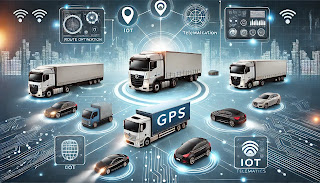
Advanced Technologies in GPS Tracking Devices
GPS tracking devices have advanced considerably, integrating technologies such as IoT to offer more robust and accurate functionalities. These technologies include:
- Advanced satellite tracking: Ensuring precise location even in areas with limited reception.
- Vehicle telematics: Providing data on engine performance, fuel consumption, and other critical parameters.
- Automation: Allowing automatic management of certain vehicle functions.
Our products, such as the Rinho Spider IoT and Rinho Smart IoT, combine these technologies in a compact and rugged format, ensuring complete and reliable vehicle control.

Automation and Telematics: Improving Operational Efficiency
Automation and advanced telematics are key elements for improving fleet operational efficiency. These systems allow you to:
- Automate repetitive processes: Such as data collection and report generation.
- Monitor specific transport conditions: Such as cargo temperature and driver access.
- Analyze vehicle behavior: Providing valuable information to reduce wear and optimize performance.
At Rinho Telematics, we have implemented these solutions with great success, helping our clients achieve greater efficiency and safety in their daily operations.
Use Cases: Practical Applications of Advanced Telematics
The applications of advanced telematics are diverse and span several sectors:
- Transport and logistics: For real-time tracking and route optimization.
- Safety: Monitoring driver behavior and accident prevention.
- Resource management: Fuel consumption control and predictive maintenance.
Our devices have proven effective in numerous scenarios, providing solutions tailored to each client's specific needs.
Comparison of IoT Devices for Fleet Management
When selecting an IoT device for fleet management, it's important to consider several factors:
- Functionality: What features the device offers.
- Robustness: Ability to operate in difficult conditions.
- Connectivity: Communication options and compatibility with other systems.
How to Choose the Best Tracking Solution for Your Fleet
To choose the best tracking solution, it's essential to:
- Evaluate the fleet's specific needs.
- Consider the total cost of ownership: Including installation and maintenance.
- Verify compatibility with existing systems.
Future of Fleet Management: Trends and Technological Advances
The future of fleet management is driven by:
- Advances in artificial intelligence: For predictive analysis and automation.
- Development of autonomous vehicle technologies: That promise to revolutionize logistics and transport.
- Integration of more advanced IoT systems: For even greater connectivity and control.
In conclusion, the integration of advanced technologies in fleet management not only improves operational efficiency but also provides greater security and control. Rinho Telematics' experience in this field has allowed us to develop robust and adaptable solutions that respond to changing market needs. With the continuous advancement of technology, the future of fleet management is full of innovations and opportunities for companies seeking to optimize their operations.